Posted by: harrisonjones | September 12, 2011

What were they thinking…

Okay, so a couple goes into the lavatory together (uh…a man and a woman) and stays for an extended period. There was a time when nobody cared, but in today’s environment of suspicious paranoia the F-16s are called out. What were they thinking?

Different flight, same day, three people lock themselves in the lav with the same result. What were they thinking?

In New Orleans, a guy checks in at the ticket counter and demonstrates that his hunting rifle is properly prepared as checked baggage. No problem except he accidently shoots the ticket agent in the leg in the process. What was he thinking?

Another flight returned to the gate and everyone was deplaned and re-screened because of unspecified suspicious behavior of a  passenger. What were they thinking?

On a different flight a passenger was arrested because he would not turn off his cell phone. What was he thinking?

And last but not least, a man was arrested for biting another passenger. What was he thinking?

I’m not making this stuff up and I really don’t know how to comment. I’m wondering if we have people among us who are just not aware of the world around them. I don’t know what a flight attendant’s salary is these days, but I’m pretty sure it should be more.

Posted by: harrisonjones | September 11, 2011

USA

Posted by: harrisonjones | September 5, 2011

My frustrating female copilot

I knew it would happen sooner or later and it did. I checked in and declared myself fit for my three day MD-88 trip and saw a dainty, feminine signature in the first officer’s slot. Oh man; any chance of a nice relaxing rotation just evaporated like contrails at low altitude. Now I have to comport myself differently than I would with my normal sarcastic and profane copilot. Okay, I admit, her handwriting on the sign in sheet is much neater than mine, but this isn’t a competition. Right? 

She shows up with a nice smile and a firm handshake and we talk about airplanes and weather and families. So far, so good. She doesn’t roll her eyes and sigh when I ask for the preflight checklist, like my normal sarcastic and profane copilot does.  Her first landing is better than my first landing, but I had more cross wind. OKAY? Her second landing is better than my second landing. I’ve just got a lot on my mind today and feel frustrated. OKAY?  

Layover at last and the entire crew meets in the hotel lounge for de-briefing. I look longingly at the pool table and am disappointed that I will not be able to take money from my normal sarcastic and profane copilot. At last, I catch a break! She walks in, orders a beer and asks if I play pool. The flight attendants, three sarcastic and profane ladies, gather to cheerlead. One hour later my wallet is forty dollars lighter and I go to my room to sulk and pout. OKAY? 

The second day she finally makes a mistake. She drops her ink pen and utters a profanity. I can proudly say that I have never dropped my ink pen in the cockpit. So there! The third day, we are notified that the FAA will ride the jump seat on the last leg. Someone named Chris. By now I don’t have to tell you that Chris is a female air traffic controller. The flight attendants bring Chris to the cockpit to introduce her and I’m surrounded by five women. I ask the flight attendant how many passengers we have and she smiles and says, “139 and they’re all  women. I think they’re in town for a billiards competition.” That’s not funny. I’m not frustrated. No, I’m really not. OKAY? 

 I’m going to go home and chain saw something. Or maybe I’ll get a pedicure.

Posted by: harrisonjones | September 4, 2011

Airplanes and terrorism

The title of a story in my morning paper is, “Terror warning issued for planes.” The article opens with, “The FBI and Homeland Security have issued a nationwide warning about al-Qaida threats to small airplanes.” Quoting from a later paragraph, “The alert said terrorists have considered renting private planes and loading them  with explosives. The bulletin also says al-Qaida would like to use sympathetic Westerners to get flight training, then get them to become flight instructors.” 

I’m wondering if this scenario has just occurred to our federal officials, or if they might have read my recent novel, Shadow Flight. The article describes the alert as a five page bulletin and since I’m a pilot and don’t have the bulletin, I’m wondering who they sent it to. I’m also wondering if the bulletin simply describes the problem, or if it proffers solutions. As a pilot or aircraft owner, what would you do if someone wanted to use you or your  airplane for illegal or immoral purposes? Could you be bought? Money is no obstacle for terrorists or drug cartels. If you are a flight instructor, could you be bribed to teach terrorist to fly? Would you do it if your family were held hostage? What would you do to save your loved ones’ lives? 

I know many of you are outraged that I would even ask such a question, but sadly I have known a few pilots who have succumbed to the temptation of easy money in hauling drugs. The easy money usually results in hard time for the lucky ones. The unlucky ones…well, may they rest in peace. Drugs are not normally associated with  terrorism, and I don’t care to engage in a philosophical debate, however terrorism has to be financed and I’m just saying… 

It’s interesting to write fiction and create scenarios, but it’s disturbing to later see federal bulletins warning of the same scenarios. Of course, fiction after the fact is not fiction. I know most of you must occasionally think of ways that terrorists could accomplish their tasks…that’s all they think about, 24/7.

Posted by: harrisonjones | August 29, 2011

New Airplanes

The Boeing 787 has completed all certification tests and will make its first passenger flight in September. The  Japanese carrier ANA will be the airline with the honor of the inaugural revenue flight.

Photo by Boeing

There is something very special about flying a brand new airplane, fresh from the factory. The paint is unblemished, the aluminum reflects like a mirror, and the cockpit and cabin looks and smells new. Coffee has yet to be spilled and food trays have yet to be dropped. The logbook documents only test and delivery flights.  

I had the great privilege of flying the first passengers on several newly delivered airplanes during my career and  it was always a very special feeling. My very first flight as an airline captain was just such an occasion. I had just finished MD-88 initial training as the most junior captain on the airline and had the ATP type rating in my   pocket, dated yesterday. Crew scheduling called and asked to speak to Captain Jones, which was my first thrill of the day. They informed me that one of our flights in Tampa had cancelled due to a mechanical problem and I would ferry an empty airplane to pick up those passengers and bring them to Atlanta. My first flight as a captain would have no passengers. An inauspicious beginning to a long and colorful saga.  

I met the copilot and informed him that if he let me screw up I would never let him forget it. We found our empty airplane and discovered that it had just had its initial maintenance checks after being delivered from Long Beach. The first lesson I learned as a captain was the value of flight attendants. Since we were in Atlanta, and our cabin crew was in Tampa, we would be alone and unassisted. The flight attendants normally do the cabin preflight, but we were confident that we could accomplish that on our own. What could be so difficult about that? We found all the safety equipment in all the proper locations and retired to the cockpit to play pilot. 

Life is good; I’m sporting a shiny new airplane around the international airport and I don’t have to impress  anybody but the copilot, who probably wouldn’t be impressed if Yeager was in the left seat. We did the before takeoff checklist and I left the cockpit door open since there was no one back there and I wanted to use a little captain’s authority. After two weeks of ground school, a week in the simulator, and a rating ride on the airplane, I’ve seen it all and I’m confident I can handle anything. That is, until I pulled the nose up to rotate for takeoff. 

What happened next is what I’ve come to remember as the galley wars. Unsecured aluminum coffee pots were being lobbed into the cabin like hand grenades. Unlatched galley doors were opening and dropping food trays like cluster bombs on the battlefield. Utensils were ricocheting off the walls like small arms fire and I glanced back to see a can of beer and a jar of olives going at each other on the floor just outside the cockpit. This was not covered in training! None the less, I composed myself enough to give my first airborne order as a captain. “Uh…gear up!” 

Once we were cruising, the copilot went back and put everything away. He closed all the doors and drawers he could find and then double checked everything again. When we landed there was only one small battle and a few minor skirmishes. There must be a thousand latches in the galley and only the flight attendants know where they all are. I have suffered galley phobia ever since. Send me out in thunderstorms, snow and ice, cross winds, turbulence, mountainous terrain, no autopilot, but please don’t ever dispatch me without flight attendants again.     

Posted by: harrisonjones | August 25, 2011

Call out the reserves…

Watching Hurricane Irene track toward the east coast reminds me of the years I sat on reserve, waiting on a call from crew scheduling. An airline pilot’s life is controlled by his seniority number for the type of aircraft and seat that he flies. Some choose not to move to a bigger airplane or a captain’s position until they are senior enough to  hold a regular trip with weekends off. I, being the adventurous type, always advanced as soon as possible even though it meant I would be on reserve and at the mercy of crew scheduling. If things went smoothly at the airline, reserves would not be needed and I would have a lot of time off. Of course, that seldom happened. With the weather disruptions, caused by Irene this weekend, the reserves will be out in force. Does it give you comfort to know that the most junior pilots will be flying you in the most adverse weather? Not to worry;  everybody is equally qualified if you ignore experience. As a new Boeing 767 captain, I flew one of the first flights to land in Miami after Hurricane Georges blew through. A very gusty ILS approach to Runway One-Two with a lucky save at the last second for a decent touchdown, but the ground personnel were happy to see us and glad to be back in business.
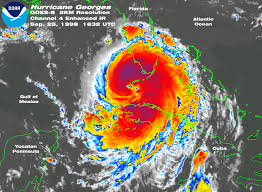
Life on reserve is best described as chaotic and phone calls come at all times of the day and night. The only call that can be predicted with some certainty is the one that always occurs on Christmas Eve. The first question the scheduler asks is, “How soon can you be here.” No problem; a fast shave, a quick car wash rinse in the shower, into the costume and out the door. “See you in a week, honey.” 

I have had to walk away from half-eaten meals in expensive restaurants, the middle of movies at the theater, birthday parties, funerals, and…well you get the picture. Why does the reserve copilot seem to consistently arrive right after I do the outside walk around in the rain? Waking up in your own snug cocoon at home is always nice, but the possibility of next sleeping in Istanbul, Tokyo, or Moscow is ever present. If it was easy, anybody could do it. It’s not all bad, however. Sometimes the most senior captain in the category calls in sick and you get his excellent trip. Sometimes you get to fly a maintenance test hop and play with the airplane like you could never do with passengers on board. Ever seen a truly maximum performance takeoff and climb in an airliner? How about an emergency descent or steep turns? Awesome!  

You also get called out to fly charters to off-line destinations that you would otherwise never fly to. Charters for professional baseball teams, NFL football teams, and college teams are common. It’s profoundly frustrating to sit around the pilot’s lounge at one-o’clock in the morning watching the Atlanta Braves play extra innings,  knowing it will be at least an hour and a half after the game ends before they show up for the charter. How many times have I told the copilot, “If it wasn’t for the money, I’d quit.” The reply, without fail is, “If you do I can move up a number.” 

It will be a busy few days for all the airline personnel as Irene blows through. I know safety will be the top priority, as always, and let’s hope the storm turns east. I’ve always thought that Hurricanes were the low
lifes of all weather  systems.   

Posted by: harrisonjones | August 14, 2011

Smoke in the cabin

A transatlantic flight diverted to Boston last night due to smoke in the cabin. This is one of the more un-nerving situations for a flight crew because there are so many unknowns involved. Make yourself comfortable on the observer’s seat and we’ll watch the crew deal with the problem. The emergency checklist for this particular  procedure is ten pages long, but I promise I will not bore you with the details. Fortunately, there are only two initial action items:

  1.      Oxygen Mask……….On/100%
  2.      Establish crew communications 

This sounds simple enough, but it’s more involved than you think. First, the mask is actually a quick donning full face oxygen/smoke mask and your head is now being squeezed by pneumatic tubing to seal it against your face. You’re viewing the world through a clear plastic window and your peripheral vision is somewhat limited. If you wear glasses you hope they stay on your nose and not your chin. Next, you are now breathing 100% oxygen under pressure, which means when you part your lips to speak, your mouth fills with oxygen and you sound like a hissing alien. Establishing communications with the crew is simple enough. You flip the switch one way to  talk to the copilot and the opposite way to talk to ATC. However, I promise you will soon be asking the copilot for clearance to the nearest suitable airport and profanely urging ATC to hurry with the checklist; all in the alien voice. You desperately want to call time out, but of course you can’t.  

Now to solve the problem. The checklist contemplates three possible sources for the smoke or toxic fumes;  electrical, air-conditioning, or leaking/damaged dangerous goods (The nuclear waste someone shipped in the forward cargo hold). Since we don’t have the time, space or inclination to consider all three, we’ll just look at the most common which is electrical. The airplane has tons (literally) of electrical equipment, any of which may overheat or short out and create smoke or fumes. The electrical system of a modern airliner can power a small city and takes about a day and a half of ground school to teach. I’ll give you the short course. Each engine drives a generator to produce AC power plus there is an auxiliary power unit with a supplementary generator. There is also an emergency, wind driven generator that can be deployed, but let’s not go there. The ship’s battery will  power a few basic instruments if all else is lost, but without the normal charging system you only have about thirty minutes to find an airport or at least VFR conditions. 

The procedure now involves isolating sections of the electrical system, called busses, until you identify the  problem. You start with the cabin busses and hope the fault is in a fluorescent light transformer or a galley oven. If not, you have to isolate busses involving instruments, autopilots, and flight controls. You can see why the checklist is ten pages long. The possibility exists that the best case scenario will involve flying an ILS approach to minimums with no autopilot and only raw data basic instruments. Don’t forget you’re still wearing the mask and turning your head instead of using peripheral vision. The hissing alien voices are now speaking soprano at a rapid clip. On your next proficiency check, if the instructor puts you under the hood and takes away your color TV, thank him for his foresight and professionalism. By the way the smoke cleared before the flight landed in Boston last night and I’m sure the dulcet tones of the pilot’s voices was a comfort on the PA. Nice job guys.    

Posted by: harrisonjones | August 2, 2011

The concrete dilemma…

Over-run accidents are rare, but when they occur, it’s usually a combination of factors that lead to the problem.

On one side of the equation, you have a fixed amount of concrete available for landing and on the other side you have all the variables. The weight of the airplane which dictates the approach speed, the type of approach available for the runway, the slope of the runway, any inoperative equipment on the airplane, and of course the weather. How much wind is reported and is it steady or gusting? Is the surface wet? Is the runway grooved for drainage? 

The landing weight of the airplane is a bigger variable than you might think. It would seem simple to just subtract the weight of the fuel burned from the takeoff weight to get an accurate number, but therein lies the mystery. The takeoff weight is determined by the number of passengers, but nobody weighs them. Passenger weight is calculated by assigning an arbitrary number, usually 170 pounds, for each passenger. Who knows how much the airplane really weighs? The CG is also estimated by assigning a moment for each first class, business class, and tourist class passenger.  With such fuzzy math, you might understand a captain adding a couple of knots to the approach speed. 

Approaches are usually flown at 1.3 VS plus five knots (30% above the stall speed) and reduced over the threshold to touchdown speed. However this number is adjusted for wind conditions. The formula is to add half the steady wind and all the gust, up to 20 knots maximum. The required landing distance is actually computed in pounds rather than feet and expressed as the maximum allowable landing weight for a given runway. A 15% penalty must be taken for a wet runway. Penalties must also be taken for inoperative equipment, such as the anti-skid system for the brakes, and the ground spoilers that kill lift after touchdown. The reverse thrust of the engines is never considered in computing landing distance.  

Once all is said and done, the FAA requires that you must be able to stop within 60% of the available runway length. Considering that we’re talking about short runways, that’s not as big a cushion as it might sound. Sixty per cent of nothing is nothing.  

My purpose here is not to analyze a particular accident, but to provide insight into all the variables involved in making a decision. Everyone wants to complete the assigned mission, but sometimes the goal is viewed through partly to mostly cloudy skies.

Posted by: harrisonjones | July 30, 2011

Are we there yet…

I was reading Joe Clark’s excellent blog this morning in which he discussed the art of cross country flying. It took me back to my previous life as a student pilot and my first cross country adventures. Preparing myself and  my Cessna 150 for a jaunt of 200 miles was a chore requiring all my new found skills. I called the flight service station and studied the weather reports they gave me in great detail and then filed a flight plan. With chart and plotter and computer (not a laptop, I’m talking about the circular slide rule) I carefully determined the true course, then converted to magnetic and applied wind corrections to find the heading I would need to fly. Next I determined the true airspeed and applied wind corrections again to find the ground speed to calculate time  between checkpoints. Next, I did the weight and balance math and finally went out to preflight the little Cessna. At that point, I could only wonder in amazement what would be required for an airline captain to fly coast to coast. 

In my next life, I found myself dressed in a costume with gold stripes on the sleeves and wings on the jacket, preparing to fly a leg that would take me half-way around the world in fourteen hours. I was handed a flight plan prepared by a dispatcher with all the calculations complete, a stack of weather briefings for half the globe,  with appropriate remarks highlighted so I didn’t have to read the details, and a weight and balance sheet with the percent of MAC and the stabilizer setting for takeoff. By the time I had my coffee and made my way to the airplane, one of the copilots had completed the walk around and we were ready to go. Climb to a thousand feet, engage the autopilot, push the nav button, and watch TV (actually, several of them mounted in the instrument panel) for the next fourteen hours. Oh my…there’s the runway at Tokyo right in the middle of my windshield; and wasn’t the arctic circle nice today?


You can decide who has the more daunting task, the student pilot in the Cessna or the airline captain. My friend Joe’s blog discussed the importance of the basics and not relying too heavily on the automation. It was always a great comfort to me that mounted among the TV screens and computer readouts; there were a few little round dials that operated directly from the pitot static system and a battery. If all else failed I had my little Cessna 150 instruments to fly with. Altimeter, airspeed, vertical speed, a magnetic compass and a battery operated attitude indicator. It’s easy to get lazy, but reality always lurks nearby. Has anybody seen Murphy…     

Posted by: harrisonjones | July 22, 2011

Research and inspiration for an aviation novel

One advantage to being an author is you can justify many things as research. Occasionally I have to be inspired and this morning was just such an occasion. In other words, I wanted to go to the airport and hang around so I did. I’ve mentioned before that research is generally easy with the advantage of the internet, however inspiration is sometimes elusive. I suppose you could say that the photo below depicts the time and place that the research for my latest novel, Shadow Flight, began.

The photo was taken in 1953 at Delta’s hangar one and two in Atlanta. At the time I was nine years old and my family lived three blocks north of the hangars. Well, duh…where do you think a nine year old would spend his days? There was no fence around the airport and no security so I would park my bicycle at the bottom right corner of the photo and wait for someone to invite me in. I loved the smell of hydraulic fluid and hot oil dripping off the DC-3s and 6s and 7s. The mechanics would assign me meaningless errands in exchange for letting me hang out. Amazingly, the scene above is almost exactly the same today. The airplanes are gone, but the hangars  remain and house the Delta Heritage Museum. The doors of hangar two have been modified slightly to allow the accommodation of a Boeing 767.

Ship 102, named The Spirit of Delta was paid for by contributions from the employees (30 million dollars) when the company was experiencing financial problems. It was the first 767 that Delta placed in service in 1982 (101 was used by Boeing for FAA certification and was delivered after being re-configured). When ship 102 was retired in 2006, it was put on display in the museum. I flew the Spirit many times during my career and we lovingly called it the dump truck because the later stretched models flew so much smoother. Other aircraft on display in the museum include a Travel Air from the 1930s.

A Stinson Reliant.

Ship 41, the first Delta DC-3.

And the fuselage of the prototype Lockheed L-1011.

This airplane was used for testing and certification but never flown by an airline. It now houses the museum gift  shop but has been used for filming movies (Passenger 57 and Quick Change) and commercials. This is one of my favorite co-pilots and movie stars in the cockpit of the 1011. Her name is Madison.

Now back to my research and inspiration. The complex has grown up around the old hangars and now includes  the Delta general offices (the offices of Ed White and Harry Dade in the book), Delta employment (where I interviewed as a mechanic, and again as a pilot ground school instructor, and again on the day I was informed that I would be a Delta pilot). Flight Control and dispatch (another scene from the book), and the Ground Training classrooms and Flight Training simulators. Today, I stood at the door of the old hangar, just as I did as a nine year old, and absorbed all the inspiration I will ever need.

Visit the museum at http://deltamuseum.org

« Newer Posts - Older Posts »

Categories